Hope in (the act of) restoration
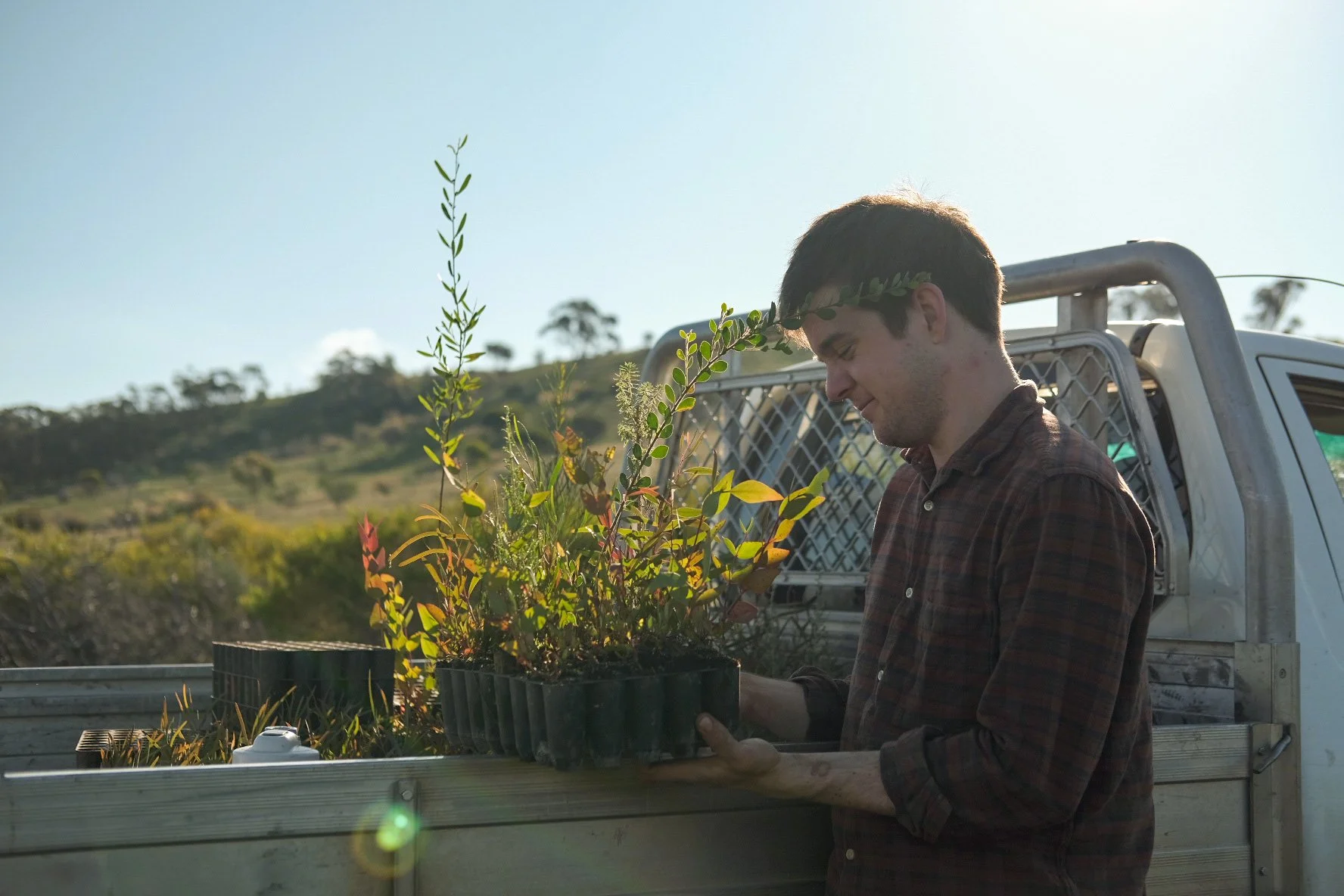
When we join in God’s restorative work, things begin to flourish.
I’ve dedicated most of my working life to restoring landscapes – and I can say that there is something profoundly hopeful about planting a small tree in the ground. Restoring nature is long, patient, and often underestimated work. But something shifts every time a tree is planted, an eroded waterway is remediated, or a seemingly degraded ecosystem begins to stir up with new life. These changes to the landscape are initially small, but they are seeds of a more hopeful future.
At Cassinia, we speak of landscapes as places where people and nature flourish together. For me, this vision is rooted in the biblical idea of shalom – a deep, interwoven peace between God, humanity, and the land. Shalom is not just the absence of violence, but the presence of wholeness. In shalom, humans live as caretakers, not consumers, of the land, and Eden is being restored.
The ecological crisis we face is immense. Species are vanishing. Forests are shrinking. Australia is on the frontlines of this crisis, as are many of the most vulnerable communities across the world. But this crisis is not without a response. People of faith have a vital role to play – as prophets warning of danger, and as gardeners cultivating beauty, healing, and change. Our role as restorers begins in the creation story. In Genesis 2:15, God plants a garden and places humanity within it, not as owners, but as tenders and keepers called to serve and to protect. Our stewardship is an act of service and guardianship – to God, to the land, and to future generations – not separate from creation, but part of its story.
We see our role as caretakers and restorers echoed in Jesus’ words, too. When Jesus speaks of the Kingdom of God, He often uses images from the natural world: seeds, trees, soil, and vines. This wasn’t poetic filler, it was a theological claim. Like nature, the Kingdom grows slowly, quietly, and often underground. Every act of tending to God’s land and His people becomes a parable of hope.
“Every act of tending to God’s land and His people becomes a parable of hope. ”
In a world worn down by conflict, inequality, and disconnection, we need stories where faith becomes material – in the soil, the sky, and the slow work of restoration. At Cassinia, we’ve seen what happens to the land when we join in God’s restorative work and pursue shalom – things begin to flourish. For example, we’ve seen thousands of hectares now filled with birdsong where once was significantly degraded and unproductive farmland. Just as importantly, something happens in the human heart when we join this restorative work. Anxiety gives way to attentiveness. Apathy is replaced by action. And our action seeds hope.
This is the restorative work God is inviting us into and the hope He’s asking us to embody. In Romans 8, Paul writes that creation groans in eager expectation and longs for liberation. It’s here, in this tension between longing and anticipating, that Christian hope lives – not in denial of suffering or degradation, but in hope-filled defiance of it.
To tend the earth is to echo God’s own heartbeat. To hope is to keep planting, even when the outcome is uncertain and unseen. And for some of us, maybe most of us, this is part of our calling: to be those who plant, who restore, who seek to walk gently, faithfully and humbly on the earth - not because the work is easy, but because we believe it matters.