The Ground Beneath My Feet, and the Bedrock Below
A personal reflection on foundational beliefs
1. Approaching the Mountain
It feels almost indulgent to write this little piece – and I am not sure if anyone will be interested in reading it – a personal exploration of the why of both what I do and why I do it.
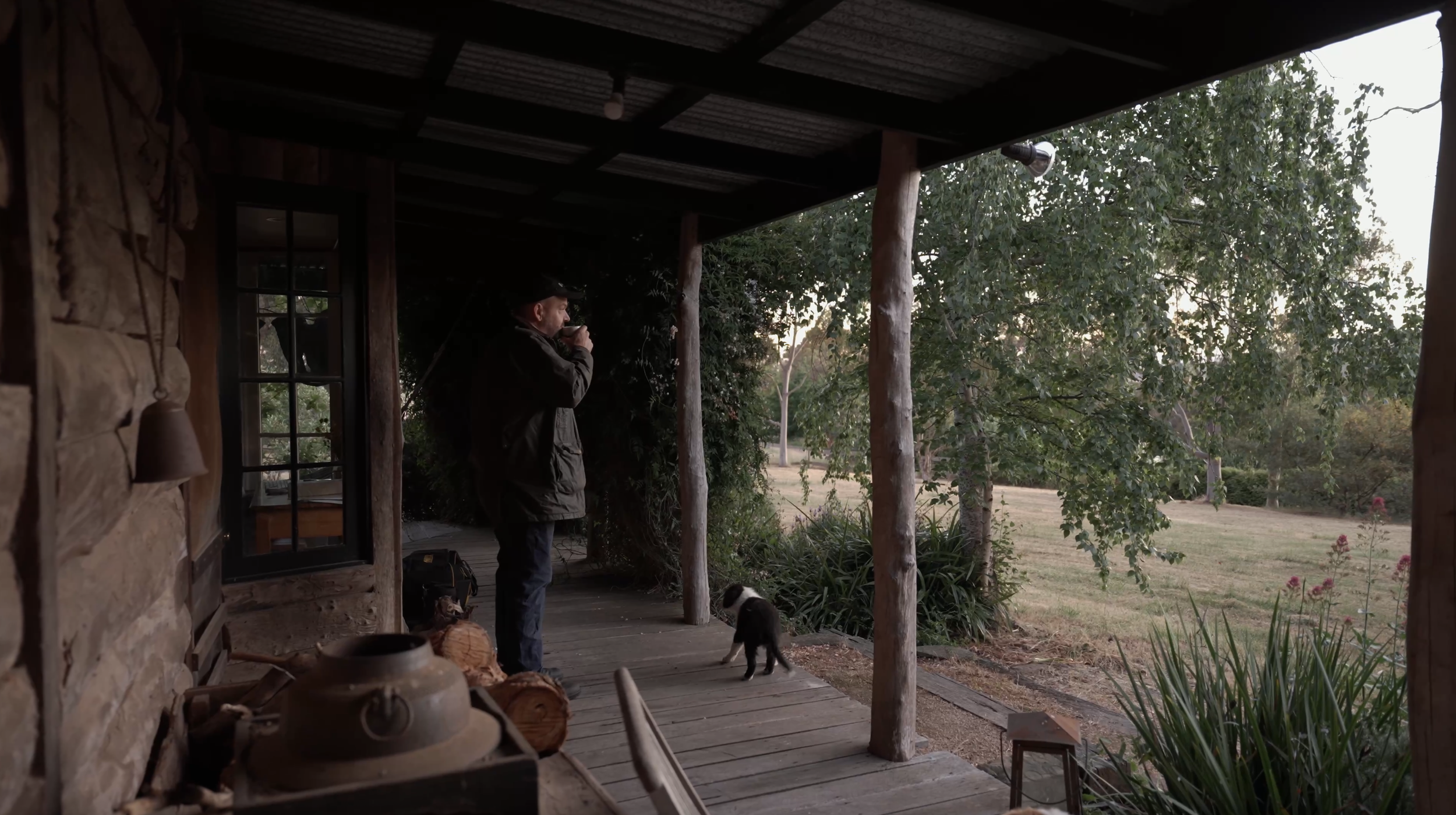
In reflecting on this, I think the way we approach other people's deepest beliefs can be like approaching a mountain. If we come at it from a side that appears sheer and unscalable — their walls of dogma and judgment — it’s not that compelling an opportunity. However, if we come from a gentler slope, where the path begins clearly and steadily, it’s possible to enjoy the walk.
Perhaps what we see depends, in part, on the direction we’re coming from — our experiences, questions, wounds, and longings — and whether we trust the people we’re walking with.
If you’ve opened this up, you probably know me, so I hope this is more like a gentle walk to see the world from my mountaintop. I’m not here to coerce or debate. I simply want to share the view from where I’m standing, the deep things I’ve come to believe, how I got there, and why it matters to me. Maybe this will resonate, maybe it won’t. But if you’re climbing, or even just standing at the base looking up, I offer this with warmth and honesty, and I would love to walk with you and to understand your journey too.
2. What Belief Is Made Of
Foundational beliefs — the bedrock on which we build our lives — are, for me, built on faith. But we all have them, whether or not we call them that: the way we distinguish right and wrong, how we make decisions, choose friendships, and relate to the world. For some, faith might be considered a simplistic crutch — perhaps even delusional or escapist. Or maybe people imagine faith as a binary switch — either you’re in or out.
But the reality, for me at least, is far more layered. The intersection of life and belief is more like layers of soil and stone, each contributing to something stable over time. And for me, these layers fall into three broad categories. Each one matters deeply, and together they form a mutually reinforcing whole.
First, there’s an intellectual layer — the realm of reason, science, history, and philosophy. This includes the observable structure of the world, the fine-tuning of the universe, the questions raised by cosmology and consciousness, and the historical depth of the human story — especially its intersections with the Christian story.
Second, there’s a personal layer — lived experience, moments of clarity, the whisper that speaks to the heart. I’ve met people of deep, generous faith — people who have been broken and repaired and come out more whole. People who live sacrificially, yet with joy. I’ve sensed something right in certain moments — an alignment that feels beyond coincidence — and grace I didn’t earn, in times of loss and confusion.
Finally, there’s a scriptural layer — what the ancient texts say, the story they tell, and how that story both resonates with and holds together the questions raised by the first two layers. There’s a strange coherence in the biblical narrative: poetry and confrontation, wisdom and comfort — all pointing toward something, or Someone, profoundly true.
I can’t say that my faith is perfect or that I have every answer. But I can say that the foundation I’ve come to trust has enough clarity, coherence, and grace that I’ve chosen to stand on it. It feels strong enough to hold my questions — and many others’ — without collapse.
3. What Drew Me Toward Faith
a) The Natural World
The natural world carries a kind of fingerprint. The intricacy of an ecosystem, the vastness of a galaxy, the elegance of mathematical constants — these have never felt random to me. They hint at structure, design, intelligence. The more I’ve learned about the natural world, the more I've been drawn not away from belief but toward a sense of awe — a sense that the beauty and order we observe are clues.
b) The Longing for Meaning
C.S. Lewis once wrote, “If the whole universe has no meaning, we should never have found out that it has no meaning: just as, if there were no light in the universe and therefore no creatures with eyes, we should never know it was dark. Dark would be without meaning.” That idea — that even our ability to ask the question points toward some kind of answer — stayed with me. It’s not proof, of course. But it’s a signpost. Our ache for more — not just materially, but morally and spiritually — seems to come from somewhere, and to point us somewhere.
Human beings reach beyond mere survival. We long for love, justice, beauty, transcendence. We make art, mourn loss, wonder about eternity. I don’t think these impulses are quirks of evolution. I believe they are signals — echoes of a deeper truth. Just as hunger points toward food, our longing for meaning seems to point toward something more.
c) The Reality of Good and Evil
Life holds both astonishing goodness and devastating wrong. I’ve seen both. Acts of compassion that defy self-interest; cruelty that defies explanation. These realities are not just theoretical — they are moral. They point toward a framework that says some things really are right or wrong. And if that’s true, then we’re not just living in a world of subjective opinion. We’re living in a moral universe. Faith not only accounts for this reality, it offers hope for healing.
d) The Life of Jesus
At the centre of all of this is Jesus. His life — as described in the Gospels — is compelling. They're an easy read if you haven't actually opened them up for yourself. He is strong and gentle, confrontational and kind. He stands with the poor, confronts the powerful, and chooses to suffer rather than retaliate. He doesn’t just offer good teaching — he offers himself. And in doing so, he reveals a God who is willing to enter our pain, not just judge it.
e) Changed Lives
I've met people whose lives have been shaped and transformed by faith in ways that defy logic. Their peace, joy, generosity — especially in suffering — have been a witness to me. Yes, there are counterexamples. Not every Christian lives well. And many people of other beliefs live deeply ethical lives. But I keep returning to those who have suffered much and yet radiate love — people like Martin Luther King Jr. or the anonymous saints in our communities who live lives of quiet, powerful grace. Their faith doesn't make them perfect. But it has made them whole.
f) A Legacy of Goodness
Across history, Christian faith has profoundly shaped the moral and cultural foundation of the modern world. From the earliest hospitals and centres of education to the scientific pioneers like Copernicus, Kepler, and Newton — who saw their work as uncovering the order of God’s creation — Christianity has consistently contributed to the common good. The abolition of slavery, the notion of universal human rights, and even the emergence of democracy have all been significantly shaped by Christian convictions about the dignity and equality of all people.
These contributions are not incidental. They are grounded in a deep belief in the value of each person, made in the image of God, and in the call to love one's neighbour — not abstractly, but tangibly, sacrificially. While the church has failed at times to live up to its calling, the legacy of Christian thought and practice has undeniably shaped much of what we now take for granted: compassion as a public virtue, justice as a moral imperative, and human life as sacred.
This isn’t about boasting or rewriting history. It’s about recognising the true and lasting good that has emerged — and continues to emerge — when faith is lived with integrity and humility.
4. Why Christianity?
I didn’t just arrive at belief in something spiritual. I arrived at Christianity. Not because it's easy (its not). Not because it’s popular (its not in Australia anyway). But because it is, to me its a compelling explanation of the world as it is — and the most hopeful vision of what it could become.
The Christian story starts with goodness, names brokenness, and offers restoration. It speaks of a God who creates, a humanity that wanders, and a love that pursues. Jesus doesn’t come with easy answers. He comes with presence. He enters suffering, bears injustice, and offers forgiveness. Christianity doesn’t gloss over pain. It insists that redemption can come through it.
This story makes intellectual sense to me. It resonates with my emotions. And it holds water spiritually. It’s not a system of escape but a call to courage and compassion. It challenges me — and comforts me.
5. An Open Hand
So — there it is. You may be far from this mountain, or just considering the path. I believe that truth can hold up under gentle exploration.
For me, faith isn’t a shortcut or a badge. It’s a long walk with a trustworthy companion. You don’t have to climb the whole thing in a day. You can just take a step. Or ask a question. Or sit and wonder.
I’m still doing that. Still walking and wondering, still needing grace every day. But beneath the shifting ground of life, I feel I’ve found something solid. A foundation. A story that holds. A God who is near.
If you would like to talk about this I’m not here to argue — but love to engage.